These Aren’t My Words

0

Up and Down...

Creative Commons License KariHak via Compfight

While on a roadtrip to North Carolina this week, I had both the time and inspiration to pound out “The Butterfly.”

While writing it, I noticed that the style, particularly the way I approached descriptions, was influenced by the Bradbury I’ve been reading pretty consistently for the last months. Ray Bradbury, especially in works like Dandelion Wine, tends to push the atmosphere or setting through a variety of delicious and powerful metaphors and self-made adjectives.

Do other writers have this tendency to imbibe the styles of authors they’ve been reading? I know that Dostoyevsky influenced The Remnant of Dreams and recently some little piece I was working on seemed to have tics of Our Friends From Frolix 8 in it.

Maybe we just find untapped echoes of our own style in the style of others?

In any case, I figure reading great authors and unconsciously imitating them can only strengthen my writing. I’ve always been fond of giving each story its own little flourish of style. Style should accentuate plot and theme.

Sometimes, this is more noticeable in some works than others, such as my flipping between first-person present tense and third-person past tense in The Select’s Bodyguard. How a thing is written should (must) flow naturally from what is being said.

Or take The Unremarkable Squire. I purposely stay out of the characters’ heads–until the right moment.

Another upside? If you don’t like one story of mine, maybe it’s just the style. Try another.


The Butterfly

1

Marta

Alba Soler via Compfight

He listened to Charlotte’s laugh from where he pretended to study and watched her from behind his notebook. The sun shone in her hair and on her cheeks, and the song of flowers was on her voice. He could pick it out distinctly from among the six of them jabbering away. Hers held a depth of rain and cool darkness, while the others were birds twittering endlessly.

Daniel tried not to stare, but it was May and it was deliciously warm and the calculus upon his lap was heavy and pale, a mushroom upon the green fields of the park. Everywhere, almost-men and almost-women lounged and dashed, flung themselves foolishly into grass pulsing with color, skipped and sang and sauntered. Yesterday hid in the mists of time; the future rippled out endlessly, moment by moment, savored like the wet crunch of golden apples upon the tongue.

Today, Daniel decided (for possibly the seventh or eighth time), he would find a way to get Charlotte alone. Always, she traveled with her gaggle, smiling and setting the world on fire with her brilliant gaze, her music subsumed into the alien feminine scherzo. He’d exchanged words in the cafeteria and classroom, joined in mock fights in the dorm lobby, but he knew no more about her than a thorough scouring of her Twitter feed might (and did) reveal.

In the new-made light of spring, he ached to know her more clearly.

He stuffed his homework into his backpack, stood, and approached with unthinking confidence. Pan’s wild flute strengthened him.

“Hello,” he said, finding it the easiest way to assault the din of discussion. “Charlotte, could I take you a walk? It’s a lovely day.”

Such directness confused the collective. They looked to Charlotte, asking wordlessly if she understood what was being demanded of her, and she looked to them, asking for permission to answer.

“Sure,” she said, her smile returning. “That sounds fun.”

She glanced back unconsciously as she left her almost-twins, like Orpheus looking back to ensure Eurydice still followed.

She and Daniel walked in silence for a time, settling into the path, into the possession of one another.

“Did you see the new Pixar yet?” he asked.

Of course she had. He’d seen her there with her tribe. It was the first question, the necessary question, because to inquire of movies among students was to inquire of weather among farmers.

And she began to speak–with joy and passion, she spoke. And he listened, ears tilted, his soul aghast with wonder, at the aria of her speech. When she seemed to come to the end of a thought, and the final strains of music began to trail into holy silence, he would add a few words, prompt a question, and she, after a moment’s hesitation, like a skipped heartbeat, would let forth a melody in response.

He listened and picked out a second theme beneath the first, and like a conductor, he drew it out, and her rich, deep voice flowed over mother and father and brother, touching softly, with great care, upon a phone call or a childhood memory.

And they walked among the shadows and the blinding sun, in grass overfull of chlorophyll, surrounded by young demigods convinced of their immortality. Daniel passed soundlessly; Charlotte colored the sky and painted the clouds and shaded the trees with quick, tentative strokes. She glanced at him and flashed her teeth in unaccustomed delight.

“Why do you look at me like that?” she asked.

“Like what?” he answered, reddening.

She laughed and turned away.

In that burst of triumph and joy, he spoke. From the longing in his heart, he spoke brash, impossible words: “Who are you, Charlotte Nusbaum?”

They had nearly gone full circle, and the sun continued on its dying path, blazing as it fell to earth. At the picnic table, like a flock of pigeons, the others waited, squawking. Daniel touched Charlotte ever so lightly, like wind that kisses flowers, and she stopped. He looked at her, letting the question flutter around them, skittish, a butterfly deciding whether to land or to flit away to other gardens.

Her face was sun upon rough water, blinding and beautiful and confused. She glanced at her cohorts, her band of sisters, for they sensed her, and she sensed them. Daniel could feel the gravity pulling her.

“Should we…?” he ventured.

She shook her head, distracted. The walk was over. The song was ending. With the echoing sounds of footsteps, the lead was exiting, stage left.

The question landed, ever so gently, ready to fly. He heard its tiny feet upon the red of her lips.

“I…Daniel, I don’t know.”

She turned away, and the little butterfly disappeared, and with shouts of joy, the harpies welcomed Charlotte back, and she joined her voice to theirs, and it was swallowed up in the too-bright light of the setting sun.


Who is Obed Kainos?

0

You may have heard about this new fantasy novel, The Unremarkable Squire, everyone (okay, me) keeps talking aboutAnd you’re probably wondering, Who is this unremarkable squire and why do I care about him if he’s so unremarkable?

Let me introduce you to Obed Kainos, a young man with no particular dreams and no particular skills. A suspiciously ordinary young man. Or, as it says in the novel:

The indicated boy nodded and approached. He was an unremarkable boy. He wore soil-colored clothes that matched his lifeless mat of hair. He was not tall, not short, not gangly, not muscular, not anxious or arrogant. He was nothing if not common. His face was impassive, as if emotion never touched it. His brown eyes glinted with a cool life, not with the flame of rambunctious youth, but with the unclouded gaze of a mathematician or the unconnected look of a dreamer. Over his shoulder hung a worn sack.

Waaay back, when the first seeds of what became The Unremarkable Squire were planted, I wanted to tell the story of a fantasy school where knights and wizards and other staples of traditional fantasy went to learn their craft. My story was going to be about all the misfits, the skinny knight and the forgetful mage and all of that. Very original.

By the time I wrote The Unremarkable Squire, nearly everything had changed, but the idea of misfits and outcasts. And out of that, somehow, appeared Obed Kainos.

Obed doesn’t want adventure. He doesn’t not want adventure. It’s hard to know exactly what he wants, actually. (Ask  his mom.) He’s mundane and more than a little odd. He becomes a squire because of a chance encounter. He swears an oath to his new master. He’s given a rather blase assignment.

And things go wrong. (Of course. There would be no book, otherwise.)

But the interesting thing–in fact, what makes the book fascinating, to me, at least–is how Obed reacts when things go wrong. Not with bravado or arrogance or wit or even good, homegrown ingenuity. Because he’s not that sort of hero.

Ask him, and he’d say he wasn’t a hero at all.

He just swore an oath and kept it, no matter what.

Which, when you think about it, isn’t unremarkable at all.

Hiding Behind the Book

1

Incognito

Creative Commons License nasrul ekram via Compfight

Two weeks ago, I was at the Momentum Youth Conference with a dozen youth. This year’s theme was “I Am Second,” or to put it in the words of John the Baptist, “He must become greater; I must become less” (John 3:30).

I have at least one selfish way I wish I could put this into effect. Sometimes, I wish I could remove my name from my works.

I find it difficult to promote my books directly. While I truly believe them to be good stories, I dislike the fact that when I sell a story, I am also compelled to sell myself.

Yes, I know that’s the way things work nowadays. You have to build your tribe. You have to create a presence. There are something like 1.26 billion books published in a year, and you can’t rely on the book selling itself. I understand that.

But I can wholeheartedly recommend The Illustrated Man or The Wheel of Time or Orthodoxy or The Brothers Karamazov to people who ask me what they should read. I have connected with these books on my own and I can freely, even energetically, encourage others to read them.

But how can I do that with my own book? How do you relate to your own work in that disconnected way? I’m not sure you can ever truly read a book you’ve written.

If there’s anything good in The Unremarkable Squire, I don’t want it to hinge on me being clever. As I mentioned in an earlier post, when I look back on things I’ve written, I’m usually impressed they’ve come out so well. The words and characters surprise me. The rough draft is a magic trick I perform without quite knowing the secret. By this I mean to say the book is something separate from myself. It has its own life. And that’s how I want to present it.

I’d much rather you’d come to know Obed, the namesake squire, than me. Because the book’s about him.

And, honestly, he’s a pretty interesting young man.

(Want to get to know him? Well, there’s this contest to win a free copy of the novel. Why not enter?)

A Big, Heavy Box

0

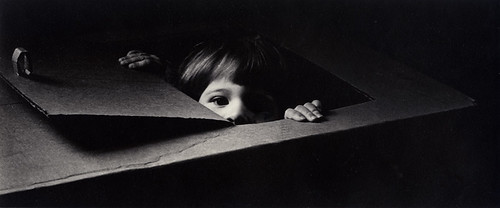
Boy in a box

Creative Commons License David Dodge via Compfight

This is the first of what I hope to be a number of blogs about the experience of promoting The Unremarkable Squire. I’m not a natural promoter, by any means, but I figure I can at least write about it as I go along.

Last week, I found a big, heavy box on my deck. It contained physical copies of my new novel The Unremarkable Squire. It was fun to open the with my kids. They kept flipping through the books like they knew how to read.

So, anyway, good news, I now have copies of my book to sell.

The bad news is I now have copies of my book to sell.

Let me explain. I love good stories. Characters live on the pages. Worlds come alive. Good books revitalize the soul. And I think The Unremarkable Squire fits the bill.

But a pile of books is a lifeless, depressing mass.

I’m of two minds about big bookstores. Sometimes I love to peek in at the pages of this book and that book. Sometimes the light of a thousand creative minds hums from the shelves.

But sometimes, it’s just a mob of screaming voices, of writers who want to be loved and care nothing of the truth, Sometimes it’s just a cacophony of words, words, words. In this mood, I understand it when Solomon says, “Of making many books there is no end, and much study wearies the body” (Eccl. 12:12b).

And so a box of books sits in my basement, waiting for me to do something with it. A pretty collection of dead trees isn’t much use.

I suppose I should find a way for people to discover the life inside.

~~~

Want a chance to win my book for free? Check out my contest, going on now.


The Unremarkable Squire – Now Available!

0

It seems like I’ve been mentioning The Unremarkable Squire for something like a year. (Oh, wait. I have.) But now, it’s time to announce…

The Unremarkable Squire is now available!

You can get the print version from the publisher, from Amazon, or from your local bookstore. The ebook , from what I understand, will be ready soon. Retail is $13.95 for the print version and $5.95 for the ebook version.

For those of you local to Kendallville, IN, I have copies and they’re also in stock at Summer’s Stories on Main Street.

I’ll have announcements on book signings and contests in the near future, as well as my own thoughts on the whole promotion process. Be sure to stay tuned.

If you’re uncertain, sign up in the sidebar for preview chapters. Also, please sign up for my mailing list (also in the sidebar), so you don’t miss a thing. While I’ll be focusing on The Unremarkable Squire in the near future, I have a short story waiting to be released, as well as other projects I hope to complete in the near future.

And, just for old time’s sake, here’s the back cover blurb, in case you’ve never read it:

A squire’s oath is to be of service… but to whom?

In the kingdom of Basileon, an unremarkable and emotionally detached young man named Obed Kainos is about to stumble into adventure—quite against his will. When the knights of the realm gather in a quest to search for the lost Armor of Arkelon, Obed is chosen at random to replace the recently deceased squire of Sir Lance Valentino. While trying to perform his menial tasks faithfully, the young squire becomes entangled in the plots of mages, thieves, and kings.

And that’s just his first week on the job.

Unfortunately for Obed, his indifference cannot save him from his new oath. For despite his enigmatic personality (or perhaps because of it), he manages to attract a band of misfits to his cause— the ugly, the arrogant, the clumsy, and the cowardly—putting the legendary armor within the grasp of one who never wanted anything at all

And, just for fun, one of the obligatorily effusive review quotes:

“A remarkable tour de force set in a medieval world where magic is as common as muck, misunderstandings are ten a penny, and everyone but the hero has a remarkably good opinion of themselves. Nick Hayden mixes humor with fantasy to delight the inner eye and ear of the reader.” — Adele Abbot, author, Of Machines & Magics and Postponing Armageddon

Happy reading!


Superman Incognito

2

91/365 Happy April Fools Day!

Mykl Roventine via Compfight

“I would not have known him, except the one who sent me to baptize with water told me, ‘The man on whom you see the Spirit come down and remain is he who will baptize with the Holy Spirit.'” -John 1:33

It always interests me that the way Jesus went about his work is not the way anyone who wanted to make him up would write it. Here we have John the Baptist, Jesus’ cousin, claiming that he would not have known who Jesus was except by this sign.

It is probably better not to read too much into one verse, but this is only one place of several where those closest to Jesus before his ministry seemed to have little idea who he really was.

For thirty years, God Incarnate flew under the radar. Just another carpenter who happened to really know his Scripture.

Compare this with Hollywood’s current hidden superhero, Clark Kent in Man of Steel. In his younger years, despite trying to hide, he still performed heroic acts. He rescued classmates on his bus and men from a burning oil rig. He doesn’t know if he wants to be a hero, but he can’t seem to help himself. The secret wants to leak out.

But Jesus? His first miracle is after his baptism, at his mom’s insistence, and it’s changing water into wine. Miraculous, certainly, but a little ho-hum compared to healing lepers and feeding multitudes and raising the dead. And even this little miracle he kept hidden.

So what to make of God hiding in plain sight?

It sounds pretty much like real life.

While You’re Waiting for The Unremarkable Squire

0

SelectsBodyguard-ebookThe Unremarkable Squire is nearly to the printer, so you should be hearing an official release date from me soon. If you haven’t signed up for a preview of the first chapters, why not do that now?

But, in the meantime, why not read something short and action-packed?

While I’ve been going through the publication process with The Unremarkable Squire, I’ve also been involved in getting the web project Children of the Wells up and running. I’ve talked about that other places and won’t bore you with details here. But, I wanted to announce that the first novella set in that world, The Select’s Bodyguard, written by yours truly, is now complete and available for free download.

Here’s the brief rundown:

When Bron, bodyguard to the Select, is jolted awake by an explosion, he quickly discovers that the entire city of Jalseion is in flames. Everywhere, people are dead, buildings collapsed, whole neighborhoods demolished. The scientific center of the world…burning to the ground.

And the Select, those who rule through the magic in the wells? Where are they, and what has happened to the magic that powers the city?

Bron banishes fear and uncertainty as he crosses the rubble with one goal: to find her.

Nothing else matters.

I’d love to share it with you. Just follow the link, enter your email, and download it. It’s available as PDF, epub, and mobi.

If you like it, drop me a note. I think you’ll enjoy it. It’s full of action and features two characters I think you’ll find fascinating.  It’s a short book (or a long short story), and unless I’m much mistaken, you’ll get through it quicker than you’d like.

Have a long weekend or a sleepless night ahead of you, or just want some good story to spend the time with? Download The Select’s Bodyguard!

The Wheel Is Broken

0

He stopped to dig the pen from behind his ear. He wrote in the margins of that age-old book these words: The Wheel is broken.

Yes–yes, that was the center, the thesis, the seed. If the structure which they had created, if the rules and systems which guided Jalseion, if the testament to intellect and ingenuity of the brightest minds shattered, that would be very near what he meant to write, what the dream sang.

The Wheel is broken.

In one day, the great city of Jalseion is broken. In 10 flash fictions, glimpse how its people–from the homeless beggar to the city’s Overseer–deal with the catastrophe and its consequences.

This is a companion piece to The Select’s Bodyguard.

Epub/Mobi/PDF: Payhip


The Duel

0

The dome shook. The ground quaked; the battered alley walls cracked; the air pressed down upon Corban Priest. He widened his stance and waited for the blow to pass. Concrete dust billowed into the air, shrouding him from his foe’s eyes, and veiling his foe from his.

He was close. Once again, he was very, very close.

“Where are you, villain?” Corban wiped his face with the back of his hand, then re-checked his ammo. It would be enough. “Show yourself! Let’s have done with this.”

Robert McKinley did not answer. He never did. He was a sly, silent snake. Two months without hearing another man’s voice. Fifty-nine nights of cat-and-mouse, cold trails, red herrings, tasteless food, restless sleep, and sudden bursts of gunfire and adrenaline.

“Come out, come out, wherever you are!” Corban fired across the courtyard of shattered cobblestone just beyond the alley, at an amputated statue that still stood, somehow.

Nothing moved.

Then–BOOM! Again, the dome above shook, and the world shuddered, his world, this maze of broken buildings and haunted streets, this long-abandoned city of no importance, this battlefield that would destroy a nation and save another. But Corban no longer cared about treaties and terms of peace. They two lived, Corban and Robert, and life was hell until one or the other died.

“My enemy!” cried Corban. “I will find you. Do you think they will save you? Your people are outside and they cannot enter. It is forbidden and it is impossible! We are sealed. This is our world. I am God to you and you are the Archenemy, the Rebel from the beginning! What can be shaken will be shaken, but you cannot and will not escape. Will you run? I will follow on your heels. Will you climb? My arms are stronger than yours. Will you hide away in a corner? I will sniff you out. Will you starve and so escape? That would be a blow, a deep blow, but still I win. I will win, and all your people will be ours, and you will be reviled and hated and mocked and finally forgotten.”

He walked as he spoke, silently, leaving the shelter of the alley and circling the courtyard, giving it the appearance of attention, his ears and eyes like satellites orbiting the planet, searching everywhere, alert. A rock skittered nearby. He did not fall for that trick. He had learned to feel the earth, to sense the vibrations in the broken pavement and glass. He had overcome the boogeyman and the midnight stalker and the whispers on the wind. He could divine that solitary, crawling creature he hated from the deadness of all that was beneath the dome.

He turned and let loose a barrage of bullets. They sprayed through the open window of a building-less wall. He waited, felt nothing, continued his slow, steady pace, entering now a wide avenue.

The dome shook a third time, a tremendous blow that rattled the bones. Corban stopped and peered at the opaque surface far above. “Wait your turn,” he muttered. “You sent us. You cannot crack the shell until only one remains. Wait till we–”

He moved out of instinct, raising his gun as bullets lanced toward him. They cut through his arm, his hand, but he got off his own–a grunt of pain!

He stumbled back, kept his feet beneath him. He breathed heavily and heard its echo nearby. “Gotcha, didn’t I?” Corban panted.

The blighted foe said nothing.

“Got you fair and square. That’s war. Congratulate me and die.”

The world buzzed. Corban lowered himself to the ground. “Oh, but you bruised my heel. You bruised it good.” His shirt soaked up the blood, dripped it. “Didn’t feel that one go in.”

Two men breathing, in, out, slowly, in silence, alive and fully aware of everything, of every second, of the grains dropping one by one.

“They’ll do autopsies,” Corban continued. “See which one died first. That’d be you. And the war’ll be over, and we’ll write the history books. You understand? You’ll be pitiful forever, in print, not even a villain, just the man who lost. And I’ll be the hero, the savior.”

Trembling, Corban pulled himself to his feet. Across the street, behind a totaled car, his foe lay dying. He had to see him, had to make sure. He checked his weapon. Empty. His knife, then.

He listened and felt and soaked in the world. Something muttered beneath the surface, but his foe remained motionless. Corban stumbled forward, toppling, and landed heavily on the car hood before working his way around.

Robert, bearded, soaked in his own life, stared up at the dome. Corban knelt. Robert’s eyes flickered toward him.

“This is the end,” Corban whispered, seizing Robert’s hand and squeezing it. How he hated the man! “The end!” The dome rumbled. Crack! Deep fissures appeared in its surface, spider frost upon a window. “The end of everything!”

And then, unexpectedly, against the rules, an electronic hiss, a tripping of sound, and a voice–a new voice, as from heaven:

“Combatants! Lay down your weapons! A treaty has been signed. We are at peace. We came as soon as we could. I repeat, we are at peace. Cease hostilities immediately!”

Corban trembled. “Peace?” He was light headed. “But I won! I won!”

“Peace,” whispered Robert, and he died.