The Select’s Bodyguard

0

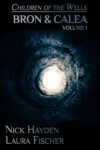
The first three novels of Bron & Calea — The Select’s Bodyguard, The Doctor’s Assistant, and The Well’s Orphan–are now available in one print volume on Amazon! I wrote The Select’s Bodyguard and The Well’s Orphan.

The back cover copy:

When Bron, bodyguard to the Select, is jolted awake by an explosion, he quickly discovers that the entire city of Jalseion is in flames. Everywhere, people are dead, buildings collapsed, whole neighborhoods demolished. The scientific center of the world…burning to the ground. And the Select, those who rule through the magic in the wells? Where are they, and what has happened to the magic that powers the city? Bron banishes fear and uncertainty as he crosses the rubble with one goal: to find her. Finding her is only the beginning. With the world turned upside down, he’ll need to find Calea, his charge, a place to belong. But is there anywhere for her to go if the magic that has been her life is truly gone? This volume collects the first three novellas of Bron and Calea, bodyguard and Select, who must learn to live with one another–or how to live without each other.

Purchase it on Amazon!

You can also read the ebooks for free at www.childrenofthewells.com, along with other ebooks set in the same world:

The Select’s Bodyguard

The Doctor’s Assitsant

The Well’s Orphan

The Bipolar, Paranoid Writer

1

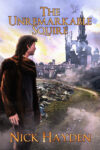
I’ve spent the last week looking over galleys of my novel, The Unremarkable SquireThis stage of publication is a strange one for me.

First, I start over-analyzing all my sentences. Is this really the best word here? (Never mind I’ve asked the same question a half-dozen times over as many previous edits.) And then I start to wonder how anyone could read such a thin, contrived piece of work. And if they do read it, isn’t it likely to come off as bland and rushed and derivative?

(This, of course, is the latest version of the writer hating his own work. Which happens about every other draft. Possibly more.)

The more I read, though, the more it becomes clear I couldn’t have written this book. Whose characters are these? Where did they come from? How did they come to say such things? Who placed the events of the plot in such a nice order?

Fact: The process by which ideas transmogrify into a story is suspect and mysterious and should not be trusted.

Then there are the passages I love, that I’ve always loved, and that I’ll open to randomly once the book’s on my shelf.

And I remember the witch’s brew of ingredients that created the story and that no one will care about (nor should they)–Celtic myths and my Old Testament college class and random Greek words and The Good, The Bad, and the Ugly (not the movie, just the title) and an old cartoon character I used to draw. And so on.

It’s an old book, started more than 10 years ago, and a new book, the final chapters added a year or so ago.

It’s a ridiculous book with a dry sense of humor, full of physical comedy. Oh, and some theological grounding (if you care about such things).

I’m pretty much convinced that it’s a good book and that no one will read it and that everyone who reads it will be very polite about it. (That’s the tongue-in-cheek paranoia.)

I’ve ten more pages to proof before I decide it’s both the ending it needed and not ending enough.

In conclusion, an author should not and cannot properly evaluate his own novel. At least, I can’t.

Still, I think you’ll like it.


Being a (Christian) Artist

2

06-08-10 And With Heart Shaped Bruises And Late Night Kisses

Βethan via Compfight

Well, this has been a sad, sad website lately. Poor, neglected website…forgive me?

The trick with keeping up this website is that I have lots of other commitments that are more pressing than entertaining some fictitious audience. (Wait, what? Real people read this? Really? Well, then.)

But it’s summer now. I’m finished teaching for the year, which frees up time. And Children of the Wells is up and running. (Go read it!)

More than that, my novel The Unremarkable Squire is going through the last stages of editing before publication. (Yippee!) I have some blogs I’d like to write about that process, but not just yet. Something else interests me today.

Today I read an article, “How to Discourage Artists in the Church.” I think it’s an interesting read. It reminded me of some feelings I had when in college.

I went to Taylor University Fort Wayne. I was a Professional Writing major. Other popular majors were Elementary Education, Social Work, Pastoral Ministry, and Criminal Justice. It’s hard, sometimes, to claim that God called you to write when everyone else has very obvious ways of serving God. Teaching children, helping the poor, preaching the gospel, defending the weak, and…writing a story set in a fictional land? Really?

It made me consider seriously why I was doing what I was doing. I have doubts still, sometimes. But I came to the point where I believed that writing is worship and that my fiction is meant to tell the truth. To “paraphrase reality,” as I heard it termed in the article that led to the one above. That makes sense to me. That, in fact, is really the only good reason I have to write.

From The Story Project to Trouble on the Horizon to The Isle of Gold to The Select’s Bodyguard to The Unremarkable Squiremy stories are grounded in Christian truth, in one way or another. I don’t have another way of understanding the world.

There’s more that could be said, but I didn’t really plan to lay out my theology of writing. And, of course, I’m not just a writer. I’m a husband and father and youth leader and teacher and bookkeeper as well. (Hence the long delay between posts.) But unless God’s grace and truth influences each and every one of those roles, it must not really be at the center.

But it is. It has to be.


The Long Version, Please

4

Notturno

gualtiero via Compfight

I don’t like abridged books.

Yes, I understand the unabridged Les Miserables is nearly 1500 pages, and Victor Hugo spends 50+ pages setting up the Bishop who gives Jean Valjean the candlesticks–a scene the movie/play does in 5 minutes flat.

Yes, I understand Leviticus is strange and long and full of skin diseases and that we don’t even practice animal sacrifices any more.

Yes, I understand the plot of Moby-Dick–you know, hunting that whale–is a bit overwhelmed with voluminous details on whale anatomy and the art of harvesting the oil.

Yes, I understand that Tom Clancy gives you every intricate detail of the politics and military movements of his characters and that Robert Jordan has a penchant for making sure you know exactly what everyone is wearing.

And I’m okay with that.

What saves a cookie-cutter Hollywood plot are the non-essential flourishes, the little sidetracks from the traditional plot structure.

Because fiction isn’t about trying to absorb as many plot points as possible as quickly as possible. The things that don’t make it into Cliff Notes are what make books worth reading. The style, the digressions, the turns of phrases, the banter, the atmosphere, the foreshadowing, the hints of something greater.

It seems to me that by abridging a book, you cut out its soul.


Unremarkable?

0

As I was teaching the fine art of interviewing and newswriting to my middle school students, I had them mock interview me about my upcoming book The Unremarkable Squire. One of the students asked an interesting question: “Why isn’t the book about the knight instead of the squire?”

That question, in many ways, gets to the very heart of what made writing The Unremarkable Squire interesting to me.

We’re trained to look up to the powerful. The majority of heroes, by definition, are powerful and hold positions of power. It’s hard to start a new TV drama without having the main character be a cop, doctor, or politician.

Few people want to be merely a writer or a businessman. They want to be a famous writer or a wealthy businessman.

One of my working titles for The Unremarkable Squire when I was in the middle of it was The Oath. Obed Kainos, the story’s namesake squire, takes an oath to both serve his master and those who need his help. And he takes his oath seriously, even when the normal, sane thing to do would be to find a loophole.

As a Christian, I believe the first shall be last, and the last first. But what does that look like in a story? (Or, more importantly, in real life?)

The Unremarkable Squire is filled with humor and quirky characters, but the heart of the story, the kernel of idea that focused me, really is answering the question: “Why isn’t this book about the knight instead of the squire?”

Things I Learned from “The Illustrated Man”

3

The copy I read, bought from Summer’s Stories for $1.

I recently read Ray Bradbury’s The Illustrated Man, a collection of 19 short stories written as only Bradbury can write them. I thought I’d share some of the lessons I learned, in no particular order.

Space is full of wonder, and Mars is Fairie-Land.

Space isn’t full of balls of gas and bunches of rocks and barren planets. It’s not about trajectories and techno-babble. No, it’s full of wonder. Try to remember that next time you watch Battlestar Galactica.

More than that, there’s a tension between mankind’s desire to sterilize everything and the romance and mystery of life. If you don’t believe me, read how Edgar Allen Poe leads armies of witches and monsters against spacemen in “The Exiles.”

Not everything has to be explained.

Rockets fly. An ancient city lies dormant, waiting. All the blacks escaped to Mars mid-1900. Some guy has the ability to create images for you to experience. Dead writers rule on Mars. Tattoos tell the future. Holographic lions hunt for you.

Is any of this explained? Just enough for the story to work.

Mystery is more than all right. It’s required. And it’s not a cop-out. It’s the point.

The Single Idea is more than enough.

If you play with your idea, let it wander about and show you the nooks and crannies of where it lives, you’ll have plenty of story. If it rains on Venus all the time, go with that. Show it. What is the landscape like, the storm, the Sun Domes, the psychological effect on man?

A single idea, fully explored, will sink deep into the mind of your reader.

Make us feel.

A clever idea isn’t enough. It’s sterile. (See my first lesson.) Show us how it feels. How does being a million miles from everything, stuck in a metal tube called a rocket, feel. What is the joy of your spaceman father returning, the worry of him being drawn back to space?

One of Bradbury’s best methods is to find a single object and imbue it with the main emotion of the story–like boxes of Havana cigars that hold both a sense of pleasure lost and an ominous foreboding. (Seriously. Read “The Fox and the Forest.”)

Your view of technology is not as important as your view of humanity.

Bradbury’s not a great writer because his view of  the future is particularly accurate. I think he struck out on about every prediction in The Illustrated Man. (I don’t think he was trying to be accurate.) He’s a great writer because humanity doesn’t change, and he understood humanity–its evil impulses and sins, its goodness and dreams.

The future isn’t paradise, but it’s not necessarily hell. It’s both, because we’re both angels and demons.

Your stories don’t have to be preplanned; they need to be good.

I had the feeling, though I couldn’t prove it, that Bradbury began with an idea and just started writing, not exactly sure where the ending was. Everything seemed introduced organically. From a strictly practical point of view, things were sometimes a bit meandering.

But, that discovering was part of the pleasure. In fact, the places a story lingered tended to be the reason the story sank into my mind.

Don’t forget the simple pleasures.

The characters in the stories look at the sky and dream. They remember the old swimming holes. They imagine good food or a long drag on a cigarette. They wash dishes on the night the world ends.

Because, for Bradbury, it wasn’t about saving the world. It was about remembering the soul.
Christians Have A Word

1

Fallen
A euphemism for the world.
Why not Shattered?:
The mirror of God
Smashed by His reflection,
Lacerating Man,
His hand.

I know it here, blindly—
In the foreign streetlights,
The yellow line in headlights,
Tired, with hours behind,
Dead tired, and hours ahead
Unknown.

I know it
Like failing memory,
Like laughter at a casket,
Like another movie,
Another song,
Another, another, all life long,
Till all’s a barren land.

Groping man questions God.
Does He,
Answering,
Grope for Man?

In the beginning:
Eden’s light.
In the beginning:
God’s delight:
The sun, the moon,
First day, first night,
Land, plant, bird, beast,
Adam, Eve — all’s Right.

Shattered

The world growing older,
Growing colder—
Dark creatures waging war,
Cracked Nature exacting toll,
Hungry Night drinking souls.
And then, the Great Revenge,
The Paragon of the Plans of Men—
Jesus beat and beat again.
Pound
The nail repays our tortured years.
Pound
The nail demands he feels our tears.
Pound
Demonic joy at striking back.
Eye for eye.
Tooth for tooth.
Life for life.

Somehow the sun that hid,
Returned.
Revenge,
Sickening sweet,
Brought about its own defeat:
Guilt assuaged.
Sin undone.
As in heaven,
On earth begun.
The empty tomb,
The final step.
The miracle?
Jesus wept.

Children of the Wells – Coming Soon!

1

skinny-header

I’ve always been fascinated with serialized, multi-author projects.

Back in 2005-2006, I helped organize The Story Project, a two-year, multi-author project consisting of the fictional blogs of 13 characters as their lives intertwined in a New England mansion.

A few years later, I helped organize a pulp fiction project where writers wrote a third of a pulpy story then exchanged with each other, wrote another third, then exchanged for a final time before writing an ending. This is where Nathan Marchand’s Destroyer comes from, which is the inspiration for House of the Living. (Incidentally, I have a barbarian story from those days I mean to dust off sometime this year.)

Children of the Wells (CotW) is the newest and most ambitious of these projects.

CotW is a shared world, meaning that multiple author will contribute to the same world. The novels will be episodic, meaning they are self-contained but contribute to an ongoing storyline. They will be serialized, meaning you can read new content each week. And they will be good.

You  may have read the summary before:

The Cataclysm destroyed our magic wells and, along with them, our technology, our scientific advancements, and our aristocracy. We thought the world was dying. Forced to rely on our former enemies, we evolved, but in those first days, we had no inkling of the true extent of that change.

The world is almost-modern fantasy, where technology developed differently due to the possibilities opened up by magic. The story begins with a disaster in the scientific capital of the world, Jalseion, that changes everything.

The Select’s Bodyguard, the first novel set in this universe, begins serialization the first week in April and starts off with a bang.

We want these stories to be interesting, exciting, and character-focused. In The Select’s Bodyguard, you’ll be introduced to Bron and Calea. I think you’ll enjoy these characters, though you may hate one and love the other.

Check out childrenofthewells.com to sign up for our newsletter and spread the word! We want to reach people with our stories. If you’re interested, tell others. We’d love the publicity.

It’s coming….


What’s Happening Behind the Scenes

0

I tend to scribble a lot

Nic McPhee via Compfight

My website’s been pretty quiet lately, and I apologize for that. It’s because I’ve been busy on projects and tasks that you’ll see soon. Here are a few of them.

The Unremarkable Squire

I’ve spent my daily writing time lately going over corrections for The Unremarkable Squire, which is to be published this summer. I’m about halfway through my editor’s notes. It’s been fun to re-read the story again.

Man, I started that novel a long time ago….

Children of the Wells

What is this? you say. It’s a new multi-author project premiering in April. We hope to create a series of novels in a shared world. All stories will be available to read online as they are published chapter by chapter. Then we’ll have bonus-packed ebooks and such things.

But what is it about? you ask. Well, here’s a sneak peek:

The Cataclysm destroyed our magic wells and, along with them, our technology, our scientific advancements, and our aristocracy. We thought the world was dying. Forced to rely on our former enemies, we evolved, but in those first days, we had no inkling of the true extent of that change.

And that’s all I’m giving you for now. Except for this: I have the honor of writing the first novel, The Select’s Bodyguard. Here’s the tagline:

When the world’s burning, you save what’s most important…even if she’d rather die.

Stay tuned!

My Mailing List

I’ve been putting effort into building a mailing list. I recently reached my first goal of 20 subscribers. Yipee! The 20th subscriber, Pam Bottjer, will receive her choice of Another World or The Day After

Now let’s shoot for 50. I  think that’ll warrant an original story of the 50th subscriber’s choosing. Sound good?

And that’s it!

(Now I just have to get these things finished.)

Picture: Creative Commons License Nic McPhee via Compfight

House of the Living

2

When scientists stumble across the perfectly preserved body of a Tyrannosaurus Rex, the first question is: How? But as one scientist spends his life studying the extraterrestrial crystals that caused its preservation, his questions become deeper, touching his deepest fears of life and death.

“House of the Living” is a science fiction short story inspired by a scene from Nathan Marchand’s Destroyer. This story, part of a short story exchange, stands on its own.

I really enjoy how this story turned out. Most of the comments from early readers centered out it being “creepy” or “haunting.”

Download it free in the format of your choice.

PDF: House of the Living

Ebook: Smashwords