Between

1

Without looking back, Lamar stepped through the rip in space-time, knowing well he might die. It didn’t bother him much. Treated like a mech-drone, abused by the whole star-lost community, if he died, he’d find peace sooner than later.

A strange pulling sensation gripped his body, as if he were being flattened to the width of an atom. Then, with a snap like the release of a rubber band, he reassembled. The sight before him was so unexpected it lifted him from his sullen thoughts.

The brains among the lost starship crew had hoped to create a wormhole back to Earth using alien tech. But even genius Alan admitted that his equations were guesses at best. Highly educated guesses, of course, but guesses just the same. Last night, Maggie had warned Lamar that if Alan’s equations were wrong, the rip might take him not through space, but through time. She cared for him; Lamar knew she did. Why, then, did she give her affections to that pompous, overstuffed scientist?

But Lamar saw that he had traveled neither through time nor space. He faced his fellow interstellar wanderers, having somehow turned about face, as if by stepping through the portal he had been reflected in a mirror.

“What happened?” he asked, a little frightened. Something was wrong. They were staring right past him. He looked over his shoulder, but there was nothing but the portal. “Was I gone long?”

They didn’t answer, and he saw now that they were motionless. He descended the raised platform. “Is this some kind of joke? It’s not funny.”

No response. Nothing at all. No, that wasn’t true. If he watched carefully, he saw infinitesimal movement. He waved his hand in front of Alan’s pointed nose, trying to get his attention somehow.

That’s when he saw it.

An aura surrounded Alan; Lamar could see it when he looked closely, but it disappeared when he concentrated on his immediate surroundings. It hung about Alan like a mist, and if Lamar focused, his vision could pierce various layers of the mist. And the longer he studied these layers, the more they formed into meaning, like words sparking images in his mind.

In a flash he caught a vivid picture/emotion of Alan’s contempt for him, a sneering multi-sensory experience. It passed.

Lamar looked around again. He had not traveled through space or time, but perhaps he had landed in some half-dimension between physical realms where thought took shape.

He turned to Maggie. Above her beautiful hazel eyes and brown curls, the same enigmatic fog hung. Lamar cautiously touched her hand where it rested on delicate controls. Though warm, it felt more like concrete than flesh. He gazed into the swirling mists, searching. Emotions and memories flitted across his consciousness. Like a man scanning for a word in the jumble of a word search, meaning appeared and became illusion. There it was—concern. Affection. Motherly pity.

Lamar soaked in the emotions, shame and pleasure intermingled in response. Then, seized by a wild idea, he reached into the nebulous formation and carefully, tentatively, began to shape it.

He wrote poetry sometimes to release his frustration and loneliness. When he wrote, feelings overpowered logic, the sound of a word overtook its sense. That was how he guided his hand now, by poetic rationalism. Pity bloomed into desire. Affection transmuted into passion.

Lamar returned through the portal.

“Did it work?” Alan demanded. He was obviously disturbed by Lamar’s return.

Lamar opened his eyes wide. “I just stepped through it a moment ago—has time passed?”

“Five minutes. The readouts registered nothing. What happened?”

Lamar couldn’t resist a glance at Maggie. A new light shone there, and she smiled at his attention. “Nothing. It didn’t work.”

Heavy Construction Underway

0

If you’ve managed to stumble upon this site, you’ve discovered it’s a collection of girders and drywall without a final shape. Be patient. There’s much more coming–more stories, more pictures, more features.

Until then, feel free to test out the foundation, point out any cracks, or simply sit back and wait for the structure to rise up, piece by piece, until there’s a fully functional website.

Nick Hayden
Head of Construction

The Stories of My Life

0

Six

I asked mom for a dog. She said no. I asked mom for a dog again. She said no. I asked dad for a dog. He said yes. I named him Jumper.

Eleven

Suddenly, the alien attacked me, but I punched him and he flew through the air and hit the wall really hard. I laughed at him. He couldn’t beat me because I was an astronaut.

Suddenly, a triceratops appeared. The alien called it with a strange teleporter beam. The triceratops’ name was Xzarg, and it was very mean. It tried to attack me with its horns, but I punched it and it flew through the air and crushed the alien.

Fifteen

The next day I decided to check out the superpowers I had gotten. I looked in the mirror. My muscles were huge! I could probably throw a car into the air. I wondered if I could fly.

I was almost late to school because I was trying out my lazer vision. On the bus, Mindy noticed my big muscles. “Have you been working out?”

“Sort of,” I said grinning. Then I decided to do something I had never done before. I asked her to the dance.

“I’d love to go,” she said. She laughed. It was a pretty laugh.

Eighteen

I pulled my cape around me, wrapping myself in darkness. “You deserve to die,” I breathed. He had injured me in his attempt to escape. Blood soaked my shirt, but I ignored it. I lifted him off the ground. His feet kicked as they tried to find the floor. I felt his heart beat in the veins around his neck. I squeezed his throat, slowly. It was like squishing a banana in my fist. He tried to beg for forgiveness with his last breaths; I didn’t listen. He didn’t deserve forgiveness.

Twenty-two

She looked timidly at him. Had he really said…?

“I love you,” he repeated in a whisper. It seemed a great effort for him to say it.

She laid a hand on his arm. “I had hoped, but you never…” She wanted to tell him so many things.

He smiled. ‘I was afraid.”

“I am afraid,” she said, laughing. She stared into his eyes. They met hers, drew her to him, and their lips met.

Thirty

He rode out of town, patting his horse absently. Next town over, there was trouble. And if there was trouble, he had a duty to fix it.

The sun was warming the arid landscape. He pulled the brim of his hat down to shield his eyes.

He thought back to the look Widow McCarthy had given him when he’d told her he’d have to go. He couldn’t shake that proud, hurt expression. Her child was sick and she got lonely out in the country like that.

Well, perhaps if he survived these outlaws, he’d settle down. It weren’t right to keep a woman like that waiting.

Forty

“Get down!” He pushed Eva to the ground as bullets sprayed overhead.

She looked up at him with those wide, alluring eyes. “What’s happening?”

“I’m saving you, that’s what.” He pressed the control in his tuxedo pocket. “Here we go.”

His red sports car plowed through the mansion’s wall windows, shattering glass. Grabbing Eva’s hand, he pulled her to the car. “Come on, get in.” He shoved the car in reverse, spun it in a circle, and sped off before the henchmen could recover.

He glanced at Eva. Her chest was heaving from excitement, her full red lips quivering. “Quite a party, huh?” he said, giving her a wink.

Fifty

The bank manager squinted through his spectacles, examining the papers. “It seems that we’ve declined your loan.”

“Can’t you reconsider? I’m at the end of my rope. My children…”

“Are they starving, Mr. Stephan?”

“No, no, but—”

“That is more than can be said of many these days. I’m afraid our decision is final.”

“But if I can just have this money, I’ll pay you back, with as much interest as you want, I swear. I’ve lost everything, but I know I can get it going again—” He saw that the bank manager didn’t care. “It’s not for me,” he said. “I want to leave my children something, my grandchildren something. Don’t you want to leave your children something?”

“Mr. Stephan, we are a bank, not your fairy godmother.”

Sixty

Mary was so excited that she couldn’t get to sleep for a long time. Tomorrow she would be going to her Grandfather’s farm for the summer. She loved the summers she spent with her Grandfather. He owed dozens of horses, which he let her ride, and strange things always happened that only she and her Grandfather knew about.

In the morning, she watched for the turn that took her to the farm. Even though it took more than an hour, Mary watched for that old school building where she and Grandfather had met the dwarves last year.

Finally, they arrived. Grandfather was waiting for her. “Hello, Mary,” he said, hugging her. “How have you been?” His eyes twinkled.

Seventy

I have long put off arranging the events of my life into something that might be called a biography. In part, I delayed because of a superstition that if I began, I was acknowledging that the most exciting and worthwhile parts of my life had ended. But also I delayed because I wondered if it was even necessary. When I look over my many novels and short stories, I find they are a sort of history in themselves. For I could never write an abstract thing called a story; I could only ever write of my own pains and desires and struggles, as thinly veiled as they sometimes were….

A New Song

0

Peter held the gun in a trembling hand. He had never before fired a gun. This one had sat by his bedside for the last month, new and unused.

He sat in the balcony of the Embassy Theater, staring up at the domed ceiling. The stage lay empty below. He wore the red uniform of a theater usher.

He had chosen this spot because he would be remembered. When they found his body, his name would be on the front page of all the newspapers. And he had come here at the end because it was the only place he had ever been happy.

Music was his one joy. Tragic melodies resonated with his lonely soul; the rising notes of triumph lifted him into unknown heavens. He believed in neither God nor demons, but in concertos and crescendos. From the first dissonant tunings to the ending applause, he lived in the presence of a thousand transcendent gods and a thousand impish devils.

He raised the gun. He knew from movies he should stick the barrel in his mouth. It seemed undignified, debased—but what did it matter? An artist might contrive to hang himself from the stage lights to present as grotesque a figure as possible. He was no artist. He was a bag of flesh.

He stuffed the barrel in his mouth, gagged on it, removed it. He checked the safety. Off. He wiped away furtive tears. He lifted the gun again, pressed his finger against the trigger. He shut his eyes—why, he didn’t know. He would join the emptiness soon enough.

He hesitated.

A strain of music reached him, drifting in and out of hearing. For a moment he thought he had pulled the trigger and the voice was….

It was a wordless melody, not quite in tune, but gentle, like a mother’s lullaby. He kept his eyes shut, trying to name it. He had memorized all the great works, his head full of Puccini and Mozart, Ella Fitzgerald and Gloria Gaither.

“What is that song?” he blurted out, breathless, as if confessing to some crime. His eyes flew open. He saw no one. He hurried down the stairs to the balcony edge and leaned over. A woman somewhat past middle age stared up at him in surprise.

“You scared me,” she said. She held a broom.

The gun was still in his hand. He hid it below the balcony edge. A scene flashed before him of the lady crying on the local news, blubbering about how he had shot himself in front of her.

“What was that song?” he asked again.

“I don’t remember what it’s called. My dad used to sing it to me.”

“Ask him what it’s called. I have a phone.” He needed to know before…well, before.

“He’s not alive any more, but I find myself humming it,” she said, self-conscious. “I need to get back to work.”

He nodded. She returned to her cleaning and he to his seat. The gun weighed heavily in his hand. Exhaustion pulled at him. He wanted to sleep. The melody started again, a low tune carried up to him by the room’s acoustics. What song did he leave the world?

When he woke, the woman was gone. He stood to leave before remembering why he had come in the first place. He touched it. How cold the gun was in his pocket! He stood undecided, lost in half-thoughts. He came to, realizing he was humming that nameless song. He focused on the tune left to him by a stranger, the tune of a dead man, and tried to draw out its beauty.

Tiredly, he ascended the stairs and left the empty auditorium.

The Eden Project

0

Mark had enrolled in the Eden Project just out of college, nearly twenty years ago, when it was still an experimental government program. It was strange to look back on those pre-Eden days.

At 40, he was fitter than he had been at twenty. He was well-fed, but he completed the required workout sessions assigned to him by his computer trainer. He had known some residents who rebelled against such compulsions, but that had been early on, when people didn’t trust Eden. Now the residents knew better. They were healthier, stronger, and by all medical measures, should live to be at least 100.

He’d been given access to a database of potential companions when he’d arrived, personality matched by matrixes designed by famed Internet dating gurus. Amanda had been his first fling, Brittany his first long-term relationship. He and Brittany had parted ways a few years ago. They still kept in contact occasionally and considered each other friends.

When he had arrived, he’d enlisted as a construction worker, building new Eden facilities as demand grew. He enjoyed working with his hands. The hours were loose, as long as you came when promised, and it gave him something worthwhile to invest in. It had kept him busy, too. The government built hundreds of new sites in those first years as people came to understand that Eden was the next wave of human happiness.

In the last three months he’d transferred four times. He had grown tired of the coastal climate, but none of the regions he tried seemed to suit him. He settled in the sprawling Phoenix Eden, and soon after scanned the relationship database as he watched a western from the tens of thousands of movies and TV shows stored on the central video database. He called the redhead for a video chat and set up a date.

They discussed basketball at dinner as the chef cooked stir fry at their table. Afterward they returned to his room. Late that night, in bed, he asked: “What do you think of God?”

“What do you mean?”

“I don’t know. Do you think someone made us? Were we made for something?”

“Mark, we’re in paradise. Who cares?”

Mark shrugged. “You’re right.”

Sometimes, though, living to 100 seemed like a long, long time, even in Eden.

The Accuser

1

The defendant stood when he was called, a tall, handsome figure in the mold of Jimmy Stewart. He blinked a little and ambled to the stand, his back erect, but not proud—assured. There were some growths of hair upon his chin and upper lip, as if he had forgotten to shave. His eyes were bright and lively, and as he faced the court, a good-natured smile flitted across his face.

The tension was palpable as he was sworn in, but it proceeded without incident.

The defense questioned its witness, then turned him over to the prosecutor.

“Your name is Lucifer, correct?”

“Yes, that is what I said earlier,” the defendant answered politely.

“You understand that you are accused of countless incidents of murder, extortion, blackmail, and betrayal, and that these acts have caused untold amounts of suffering?”

“I am aware of the accusations. I have been aware of them for a long time.”

“You claim to be the victim of a continuous and well-funded smear campaign.”

“I am innocent on all accounts, so, yes, that is what I claim.”

“Tell me, what book did you take your oath upon?”

“The Bible.”

“The Bible clearly states that you tempted mankind and that your desire is to drag as many of us into hell with you as possible. Is that not so?”

“Does it really say that?” he asked. “If you have read the Bible, then you remember how God murdered every firstborn child in Egypt and later drowned their army. You will also remember how he destroyed Sodom and Gomorrah with fire and commanded his people to slaughter every man, woman, and child in Canaan. Perhaps you will remember, too, how he threatened to wipe out his own chosen people and only at Moses’ insistence relented, or how he allowed Samson to crush a palace full of men. They too had their wives and families. I could list many more incidents. His prophets foretold years of famine and war and brutality, and yet he did nothing to stop it. Where in that long litany of atrocities is my name mentioned?

“I confess that I rebelled against God. But that is not what you accuse me of. You won’t accuse me of it because you admire me for it. You accuse me instead of all the phantom evils that plague mankind. I understand you need to blame someone. At one time you would not even have bothered with a trial, because you already assumed my fate was eternal damnation—but you are wiser now. You have made progress. I can see the sympathy you hold for me in your eyes and in your questions. You know that I am not to blame for all the pains and uncertainty of life. But you are only now allowing yourself to admit it, because what is new is hated, because progress is repressed—until the people, with one voice, rise up and overthrow the tyrannical authority that oppresses them. God is the one who sentences you to death, not me. For what? An apple? He’s the one who lets your child grow ill, not me. He’s the one who lets you lose your job. Is that love, to let his so-called children suffer? Couldn’t he stop it all if he wanted? He is Almighty, isn’t he? But he is callous and distant and powerful. He talks a good game, but where is he when you’re alone or hurt or dying?

“Convict me if you will, but ask yourself truthfully—do you want a God who expects what you can never do? He demands perfection, but he knows you sin. He doesn’t care about your happiness. He cares about his own. Don’t judge him by his words—judge him by his actions. Yes, I tempted mankind. I hoped to encourage it to seize its own freedom.”

The trial continued, and at its end, Satan was declared innocent by a jury of his peers.

Near Enough to Touch

0

After a day and a night, the wind died down and the whirling white of snow settled onto the frozen ground. Stephan stopped dead in his tracks, caught completely off-guard by the sudden change. He could not feel his limbs or his face, and all night he had continued trudging forward, lifting his heavy feet because of his single goal. The strange calm dislodged even that from his head.

The black sky was deep, like the human eye, and the stars nestled in it were sharp, like piercing glances. It seemed so near he thought he could reach up and touch the velvet blackness. He tried, standing on his tiptoes and reaching with stretched fingertips. Surely, he was only inches away….

He stood on a small plateau. He had climbed the slopes for many days, guided by that single, unrelenting desire. It returned to him now and, looking around, he discovered a monument erected on the barren landscape. It was a statue of an old man. In one hand it held a net, the shaft of which was formed of a silvery metal, the mesh of which was crafted from fine threads of gold.

Stephan stumbled forward and grabbed the shaft. The statue held it tight and would not release it. The wizened face, wrathful and wild, stared at him with unchanging eyes.

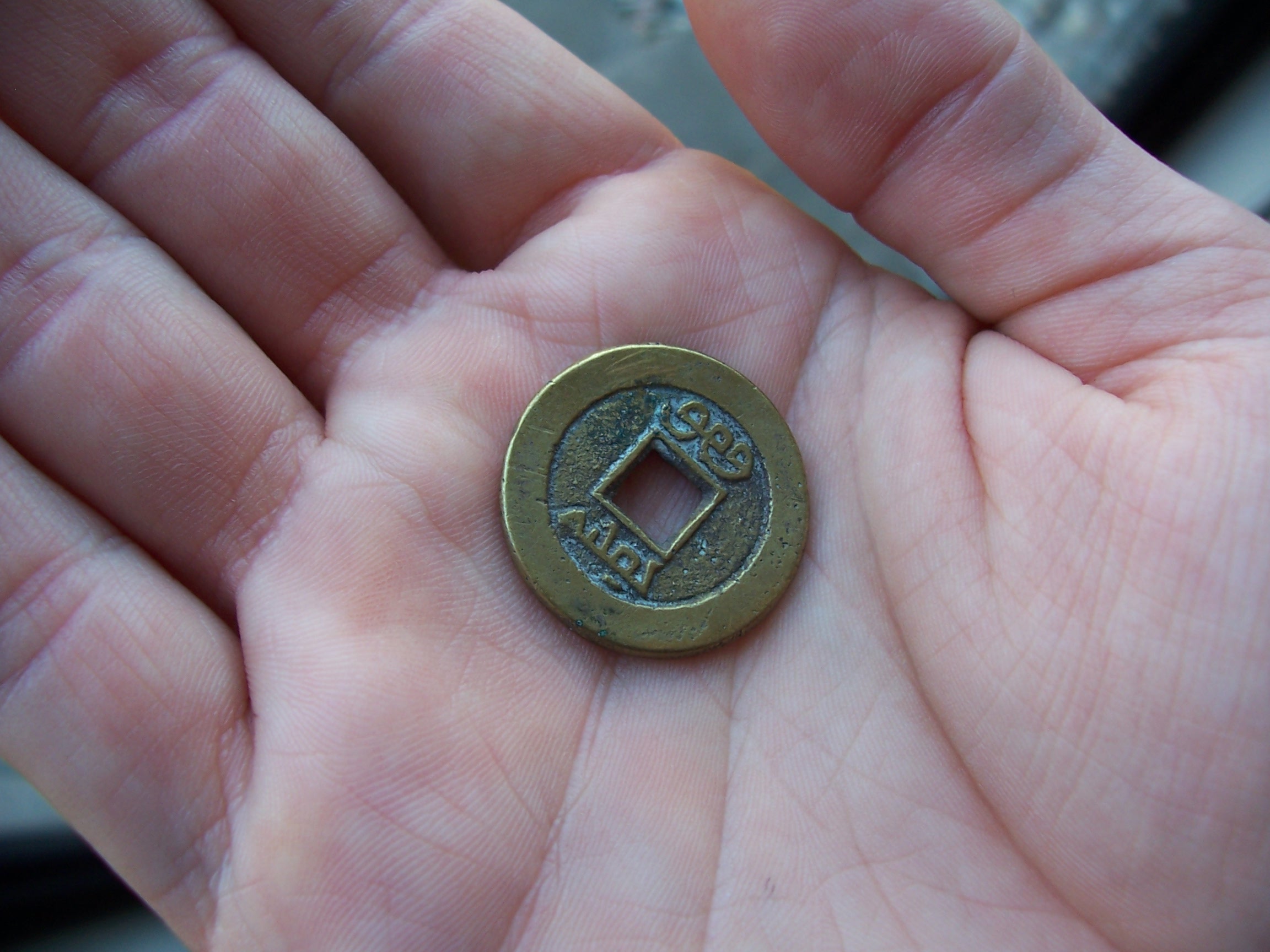
After a long time pulling futilely at the shaft, Stephan stepped back. He was almost unable to think, consumed by his need to remove the net, but in time he remembered the coin he had acquired by many journeys. He rummaged stiffly in his coat and brought it forth. The Miser’s Mite bore an ugly face and the inscription: Everything has a cost. He placed the coin in the statue’s open palm.

A crack like ice breaking resounded across the plateau, disappearing into the frozen silence. The coin had vanished. Trying the net, Stephan found it slid grudgingly from the old man’s grip.

Now Stephan studied the sky again, looking from star to star with a feverish intensity. Which was it? He had used his only coin; he had only this one chance. When he had first gazed upward, he had been certain of his choice, but now he studied each carefully, unsure of himself.

Muttering a prayer, he raised the net and caught the star he had chosen, a diamond of soft yellow fire. He was afraid to remove it from the netting. His heart’s desire lay within his grasp—if he had chosen correctly.

He clutched the yellow star in his hand. The net vanished and returned to the old man’s grasp. Stephan forced himself to open his fingers. Inside the diamond he glimpsed her face.

“Elena!” he cried. Warmth flooded his limbs.

Her face filled with joy. She tried to speak, but he could not hear her.

“I told you I would not forget you,” he said. He kissed the diamond, imagining that he kissed her lips. “One more task—one more—and we will be together forever.”

With all the tiny motions of her imprisoned body, she communicated her love, and Stephan knew he would not fail to release her.

Second Coming

0

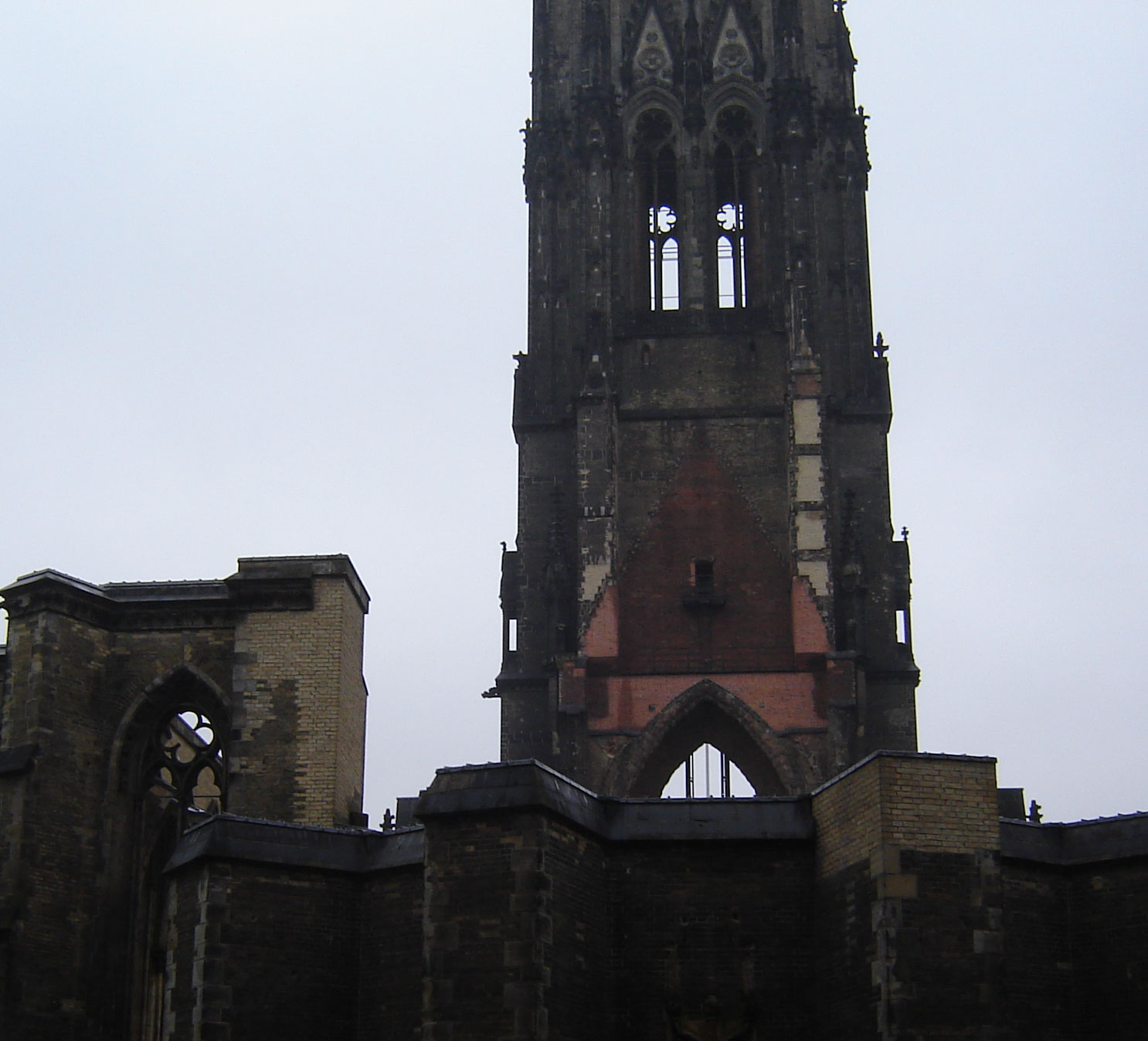
BelltowerThe bell in the crumbling tower struck two, and the sanctuary resounded with the tremor of its solemn cry. It broke through the fervency of Elizabeth’s prayers, and for the barest moment she recalled the dim, damp stone room, full of half-ruined structures and soaring bats. It had once been beautiful. The derelict church bore that sorrowful majesty shared by the remnants of all once-precious things.

Elizabeth’s knees ached against the brutal floor stones, but she accepted the pain, using it to accentuate the burden in her soul. Night after night her petitions rose to God. For centuries women had come here to beseech the Creator and to protect the trust and promise given them. Always before three had been chosen to stand before the altar with supplications. Now, only Elizabeth remained.

In her heart and in her prayers she suffered vicarious anguish on behalf of the entire earth. She had spent her life in poverty, crushed by cruel men and hardened women. She had experienced in herself how mankind bickered and fought, how it lied and spilled blood. Justice was a bribe; compassion, a stab in the back. No laws bound mankind; no moral code lifted its souls above the realm of beasts. In her prayers she not only remembered all this but she took upon herself all the boundless injustice of a senseless world.

The bell tolled three. A single servant still haunted the isle, an old and withered man, and he kept watch in his own way. When he died, Elizabeth would truly be alone.

As the long night passed, she spread herself out face first upon the ground, like one crucified upon the cold stone, and she groaned out of the depth of her sorrow and need. “Send us a Savior, Almighty One,” she whispered. Rain fell through the broken roof.

She woke at the toll of six. The sun was rising and its rays lit the wet benches of stone and the image upon the altar with a crimson sheen. The figure laid out there in stone seemed almost rosy cheeked. Asking forgiveness for her weakness, she struggled to her feet, moving as stiffly as an ancient woman.

A loud crack shook the church. Thin lines ran swiftly along the figure upon the altar. Elizabeth watched in horror as the altar fell to pieces, torn asunder by some unknown force, and even the walls trembled beneath the fearful hand of judgment.

When the dust cleared, a man strong and handsome lay upon the rubble. He sat up slowly, like a man waking in a strange place. His gaze, proud and mirthful, lighted upon Elizabeth. She lowered herself onto a bench, unable to keep her knees from folding.

“My dear lady,” said the man, “can you explain to me what has happened? How have I come to be here?”

With lips trembling in ecstasy, she answered: “You are Arthur Pendragon, come again in our time of greatest need.”

Rain

0

Daniel and Ellen Parson sat on a bench outside the library. They had come to drop off a book their youngest son had borrowed, and it being the first day with all their kids at camp, they had decided to make it an outing and walk the mile from their house. From the bench they looked out onto the parking lot, where rain cascaded against the cars.

“I can’t believe I didn’t think to bring the umbrella,” said Ellen. “It was getting dark when we left home.”

“It’s okay. We have some time.”

The rain increased in rapidity. Just outside the awning that protected them, rivers of water flowed into the drain.

“I haven’t just sat and watched the rain for…maybe my entire life,” Daniel said. “It’s beautiful, isn’t it, how it hits the ground?”

“I guess it is. Like watching a nature video.”

Somehow, their hands found each other. It was a little strange, and they glanced at one another. “Been awhile since we just sat,” said Ellen. “There’s always something going on, even if it’s only dishes or homework. I feel almost guilty just sitting here.”

“Maybe God invented rain to make us slow up.” Daniel looked up at the swift-moving clouds. “How do they hold all that water? It’s a miracle.”

“I never really thought about it.”

The patter of rain was slowing, and it seemed about to stop, but the next moment it let loose with another downpour.

“There really is a lot of rain,” said Ellen.

Twenty minutes passed, and the clouds, driven by the winds above, brought thick drops at times and sprinkles at others.

“Maybe we’ll sit here all day,” said Ellen.

“Well, why not? You’re here.”

Ellen smiled. “We might get hungry.”

“I think I can survive an empty stomach.”

“Me, too.”

A few minutes later, Daniel turned to his wife. “Let’s walk.”

“In the rain?”

“Yes, in the rain.”

“My shoes will get wet.”

“Yes, that’s true.”

“I hate wet shoes.”

“Let’s walk in the rain and get soaked. Like kids.”

“Okay.”

They entered the downpour, and as they walked, they wiped water from their eyes as it dripped down from their hair. Their feet squished in their shoes and their clothes clung to them. The rain continued unabated until they arrived home, happily drenched.

Blush

0

Turquoise water, white sand, cloudless sky. A perfect day. The shout goes out—“Beach volleyball! Starting a game of beach volleyball! Come on, you two, and you also!” Soon, teams are formed.

A young couple, the man sun-burnt, the woman with an unusually long neck, decline the invitation. They lie side by sun beneath the sun, holding hands.

Next day. Turquoise water, setting sun, the first twinkle of stars. Pleasant murmur of voices, chink of silverware. From table to table the invitation goes—“Card games, starting soon. Finish dessert and bring your poker face.” Same couple, talking incessantly and laughing, decline. Soon they return to their room.

Another day. Roiling sea, tattered clouds. Games of tennis, shopping trips, excursions to the theater with newfound friends. The young couple does not show. “Do Not Disturb” upon the door.

More days. A week in full. Airport filled with luggage and souvenirs. Sun-burnt young man holds wife’s purse uncertainly. Fellow traveler, waiting also, speaks: “These all-inclusive places are just great, aren’t they?”

Young man nods, tries to make the purse disappear.

“Always something going on,” continues the other. “Loads of fun. I met all kinds of people, had a blast.”

“Honeymoon?” asks the young man.

“Yeah. Great excuse for a vacation.”

The long-necked wife returns. Young man gratefully returns purse, bids farewell to fellow traveler. “I finally remembered what I wanted to tell you,” the wife says excitedly.

“What you forgot on our way here, a week ago? Haven’t you given that up?”

“Nope. Just popped into my head again. I read somewhere that resorts and such have needed to offer more and more programs because honeymooners get bored.”

“Bored?”

“You know, because they’ve already….”

“I know why,” the young man says with a smile. “I just wanted to see your face.” He kisses her quickly upon the cheek, as if it were some forbidden thing. “You’re so cute when you blush.”

And he rejoiced in her coy expression.